

Screen Time and Your Child's Eyes: A Parent’s Guide to Myopia
Tablets and smartphones are now part of daily life for school and play, and many parents see their kids needing stronger glasses at younger ages. Screens themselves are not harmful, but how children use them can greatly affect the rise of nearsightedness (myopia).
1. How Gadgets Affect Growing Eyes
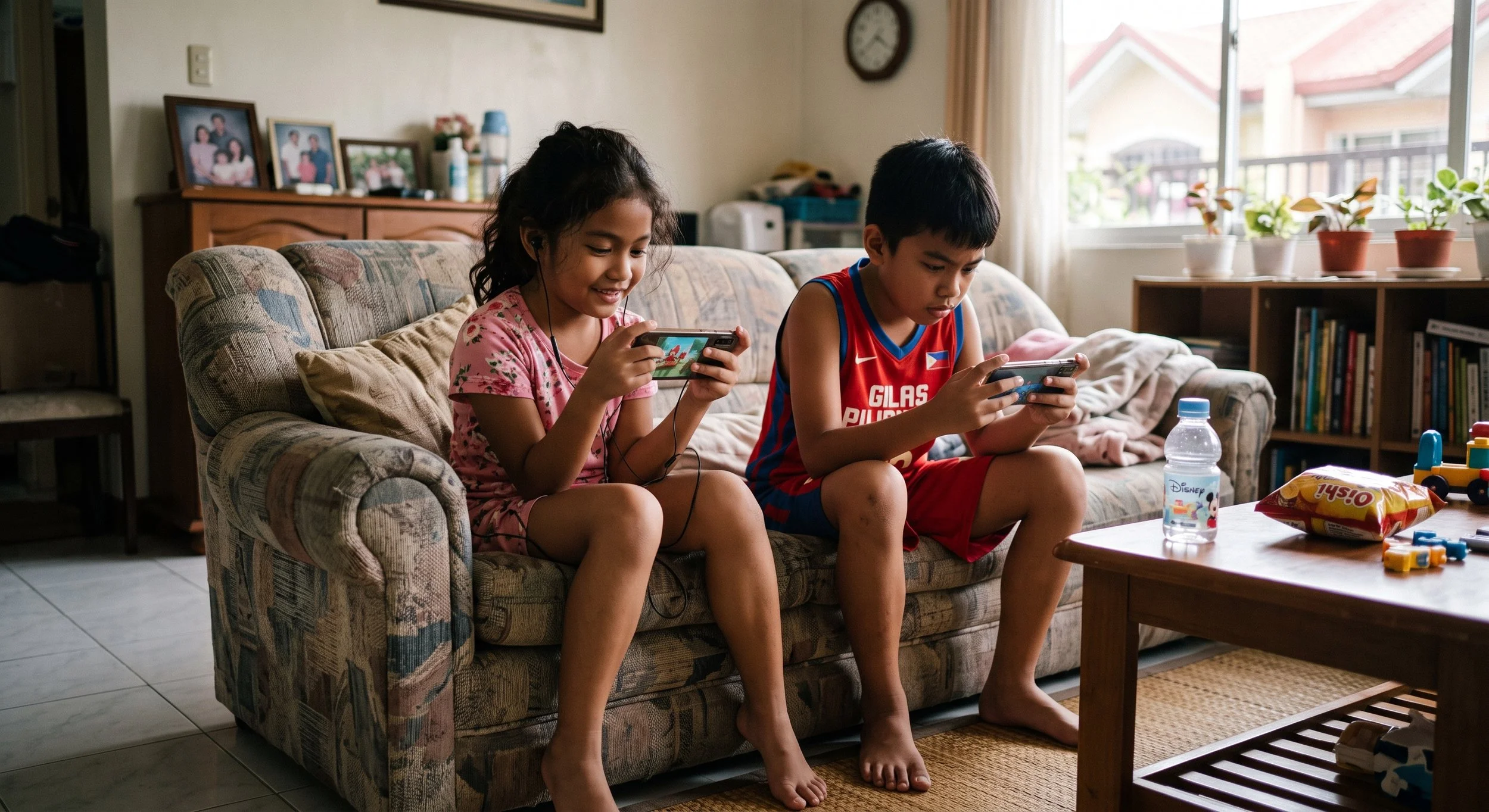
Doctors have found two main reasons why spending a lot of time on screens can make children's vision worse:
Close-Up Strain: When kids hold a phone or tablet close to their face for long periods, their eye muscles have to work hard to focus. For children who are still growing, this ongoing strain tells the eyeball to grow longer. If the eyeball stretches too much, it can cause permanent blurry distance vision.
Missing Sunlight: The main issue with screen time is what it takes away—time spent playing outside. Sunlight helps the eyes release healthy chemicals that prevent them from growing too long. When kids stay indoors with screens, they miss this important natural protection (Alvarez-Peregrina et al., 2020).
2. Screens vs. Traditional Books
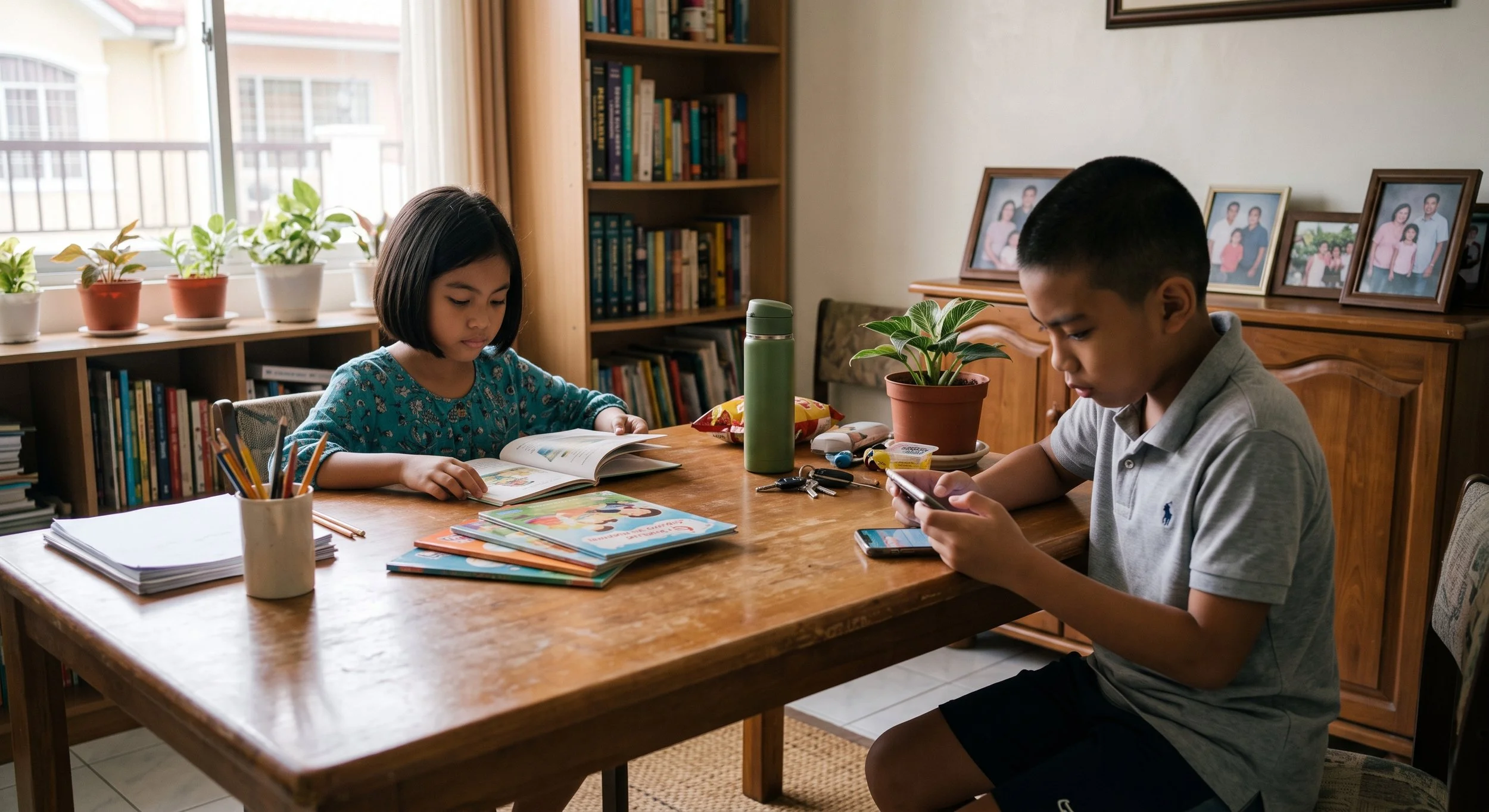
Devices change the way kids use their eyes in several ways compared to reading regular books:
Holding Distance: Kids tend to hold screens much closer to their faces, often only 8 to 10 inches away, while they usually keep books farther back.
Forgetting to Blink: Looking at a bright, moving screen makes us blink less than half as often, which can leave eyes feeling dry, tired, and uncomfortable.
No Natural Breaks: Books have chapters and pages that give natural stopping points. But interactive games and auto-playing videos keep kids’ eyes focused for much longer without a break.
3. Practical Habits You Can Start Today

You do not need to get rid of technology completely. Eye doctors suggest these simple daily habits to help protect your child's vision:
The 20-20-20 Rule: Set a timer. Every 20 minutes, ask your child to look at something at least 20 feet away for 20 seconds. This helps their eye muscles relax.
Get Outside: Try to have your child play outside for 1 to 2 hours each day. Bright sunlight is one of the best ways to help prevent nearsightedness from getting worse.
Keep Your Distance: Show your child how to hold their tablet or phone at least a ruler’s length, about 12 to 18 inches, away from their face.
4. How Your Eye Doctor Can Help
If your child’s glasses prescription keeps increasing each year, getting stronger glasses is not the only choice. Eye doctors now use proven treatments to slow down how quickly myopia gets worse:
Low-Dose Eye Drops: Special prescription drops, such as low-dose atropine, are put in your child’s eyes before bed. These drops help slow down eye growth without causing blurry vision during the day (Lawrenson & Dhakal, 2020).
Night Lenses (Ortho-K): These are like braces for the eyes. Your child wears a special contact lens while sleeping, which gently reshapes the front of the eye overnight. This lets them see clearly during the day without glasses or contacts (Si et al., 2015).
Specialized Soft Contacts: There are Specialized Soft Contacts: Some daily soft contact lenses are made just for kids. They change how light enters the eye, which signals the eye to slow its growth.isn't ready for contacts, new types of specialized glasses use microscopic zones within the lens to actively slow down vision changes while correcting their sight.
References
Alvarez-Peregrina, C., Sánchez-Tena, M. Á., Martinez-Perez, C., & Villa-Collar, C. (2020). The Relationship Between Screen and Outdoor Time With Rates of Myopia in Spanish Children. Frontiers in Public Health, 8. https://doi.org/10.3389/fpubh.2020.560378 Cited by: 142
Lawrenson, J. G., & Dhakal, R. (2020). Cochrane corner: Atropine: an ancient remedy for a twenty-first century problem? Eye, 34, 1734-1736. https://doi.org/10.1038/s41433-020-0942-9 Cited by: 1
Si, J.-K., Tang, K., Bi, H.-S., et al. (2015). Orthokeratology for Myopia Control. Optometry and Vision Science, 92, 252-257. https://doi.org/10.1097/opx.0000000000000505 Cited by: 306
Helpful Links for Parents
American Academy of Ophthalmology: Myopia Control in Children (https://www.aao.org/eye-health/diseases/myopia-control-in-children)