

Why Your Corneas Need to Breathe: The Secret to Healthy Eyes with Scleral Lenses
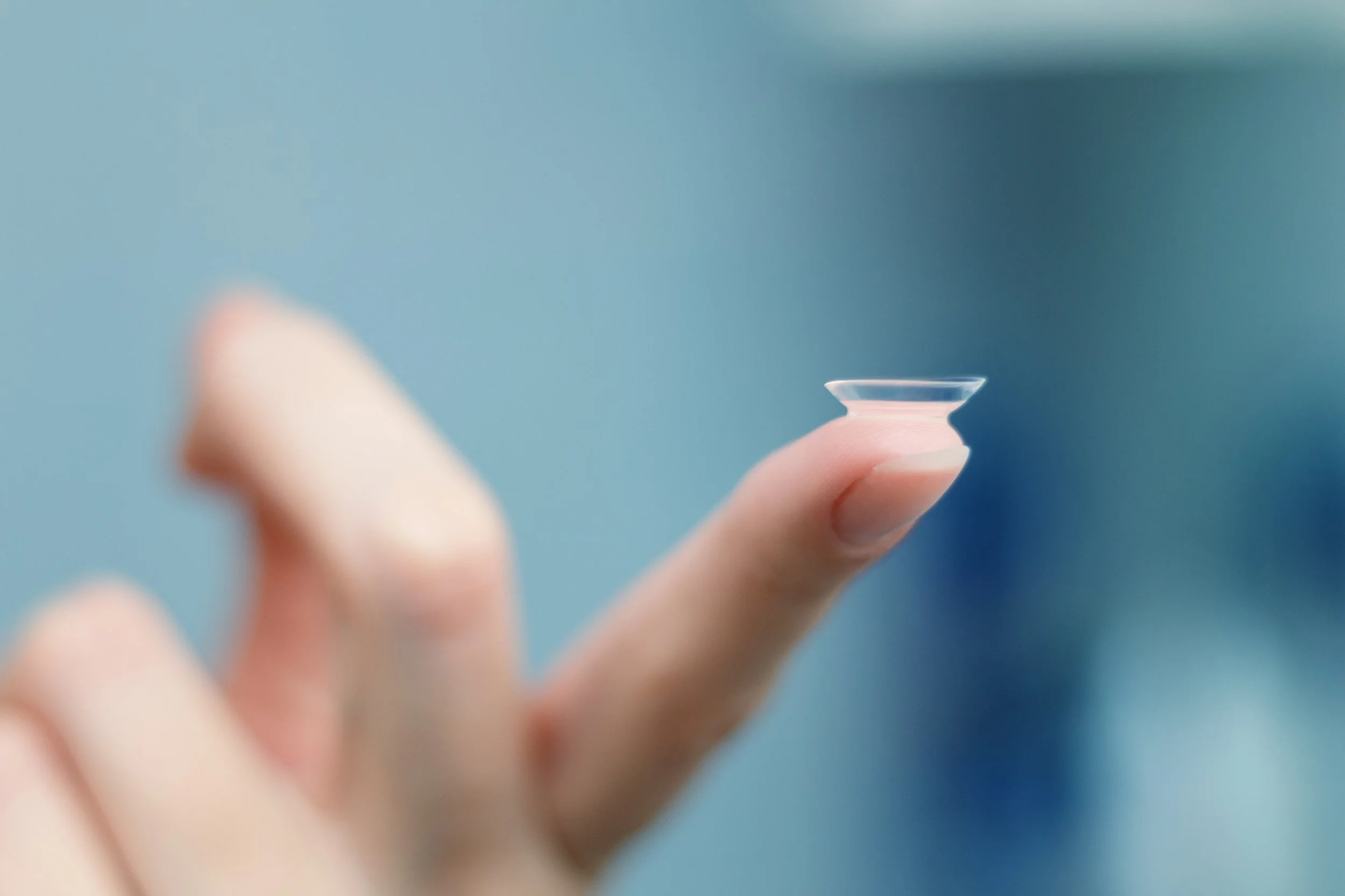
If you have keratoconus or an irregular cornea, you already know that standard glasses and soft contact lenses often fail to provide clear vision. Scleral lenses are life-changing, vaulting over the irregularities to restore sharp sight. But vision is only half the equation—the long-term health of your eye depends entirely on one invisible factor: oxygen.
Unlike the rest of your body, the clear front surface of your eye (the cornea) does not have blood vessels. It gets its oxygen directly from the air. When you place a contact lens on your eye, you create a roadblock.
Here is why lens breathability matters, and how modern technology keeps your eyes safe.
The Science of Breathability: Dk and Dk/t
When eye care professionals talk about how well a lens "breathes," we look at two specific measurements:
Oxygen Permeability (Dk): Think of this as the material itself. Just like a heavy raincoat traps heat while modern athletic wear lets your skin breathe, different contact lens plastics allow different amounts of oxygen to pass through.
Oxygen Transmissibility (Dk/t): This is how much oxygen actually reaches your eye through the finished lens. A highly breathable material won't do much good if the lens is extremely thick.
For patients wearing lenses for 12 to 16 hours a day, achieving a high oxygen transmissibility (Dk/t) is non-negotiable.
What Happens When Your Eyes Can't Breathe?
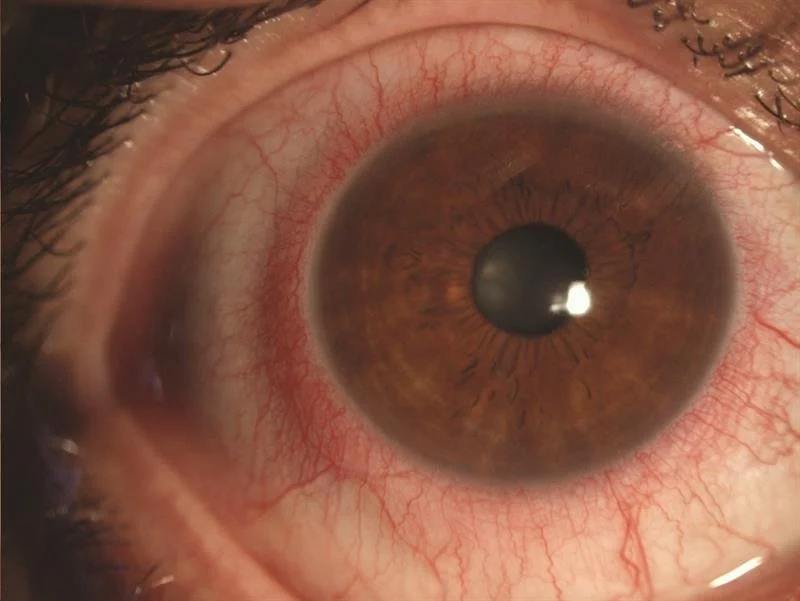
When the cornea is starved of oxygen (a condition called hypoxia), it triggers a chain reaction of complications that can threaten your vision and make contact lens wear impossible:
Red, Bloodshot Eyes: The eye panics and tries to grow new blood vessels into the clear cornea to supply oxygen (Corneal Neovascularization).
Cloudy, Blurry Vision: Without oxygen, the pumps that keep the cornea clear start to fail, causing the tissue to swell with fluid (Corneal Edema).
Permanent Cell Damage: Long-term oxygen starvation permanently alters the size and shape of your vital corneal cells, accelerating aging in the eye.
The Scleral Lens Challenge: The "Double Barrier"
Scleral lenses present a unique challenge for oxygen flow. Because they need to hold their shape and vault entirely over the cornea, the physical lens is thicker than a standard soft lens. Furthermore, the space between the lens and your eye is filled with a layer of saline solution (the tear reservoir).
Oxygen must fight through both the thick plastic and the liquid layer to reach your eye. To solve this, specialized clinics use hyper-breathable materials specifically engineered for complex cases.
How Lens Materials Compare
Rather than using older, restrictive plastics, your scleral lenses are designed using advanced polymers. Here is how the breathability (Dk) compares across different types of lenses:
Old-Generation Soft Lenses (Low Breathability: Dk 10-30): These act much like plastic wrap over the eye. They carry a high risk of redness and swelling, especially with thick prescriptions or long-wearing hours.
Standard Rigid Lenses or RGPs (Moderate Breathability: Dk 30 - 60): These rely heavily on a "tear pump" effect. Every time you blink, the lens moves slightly, allowing fresh, oxygenated tears to flow beneath it.
Modern Silicone Soft Lenses (High Breathability: Dk 60 - 140): Excellent for standard daily wear. These materials allow oxygen to flow directly through a microscopic silicone matrix, bypassing the need for water to carry it.
Specialty Scleral Materials (Extremely High Breathability: Dk 100 - 180+): This is the essential standard for keratoconus. Because the lens does not move when you blink, the material itself must force large amounts of oxygen through both the thick lens profile and the fluid reservoir beneath it.
The Bottom Line for Keratoconus Patients
You should never have to choose between seeing clearly and keeping your eyes healthy. When fitting scleral lenses, the exact material, the center thickness, and the depth of the fluid reservoir are all meticulously calculated to guarantee your corneas can breathe easily.
If you are experiencing end-of-day redness, fogging, or discomfort with your current lenses, your eyes might be starving for oxygen.
About the Author:

Dr. Mark Paroli is a board-certified optometrist who specializes in fitting specialty contact lenses and prosthetic eyes. He uses rigid gas-permeable (RGP), Kerasoft, and scleral lenses to enhance vision in individuals with keratoconus and other irregular corneal conditions.