

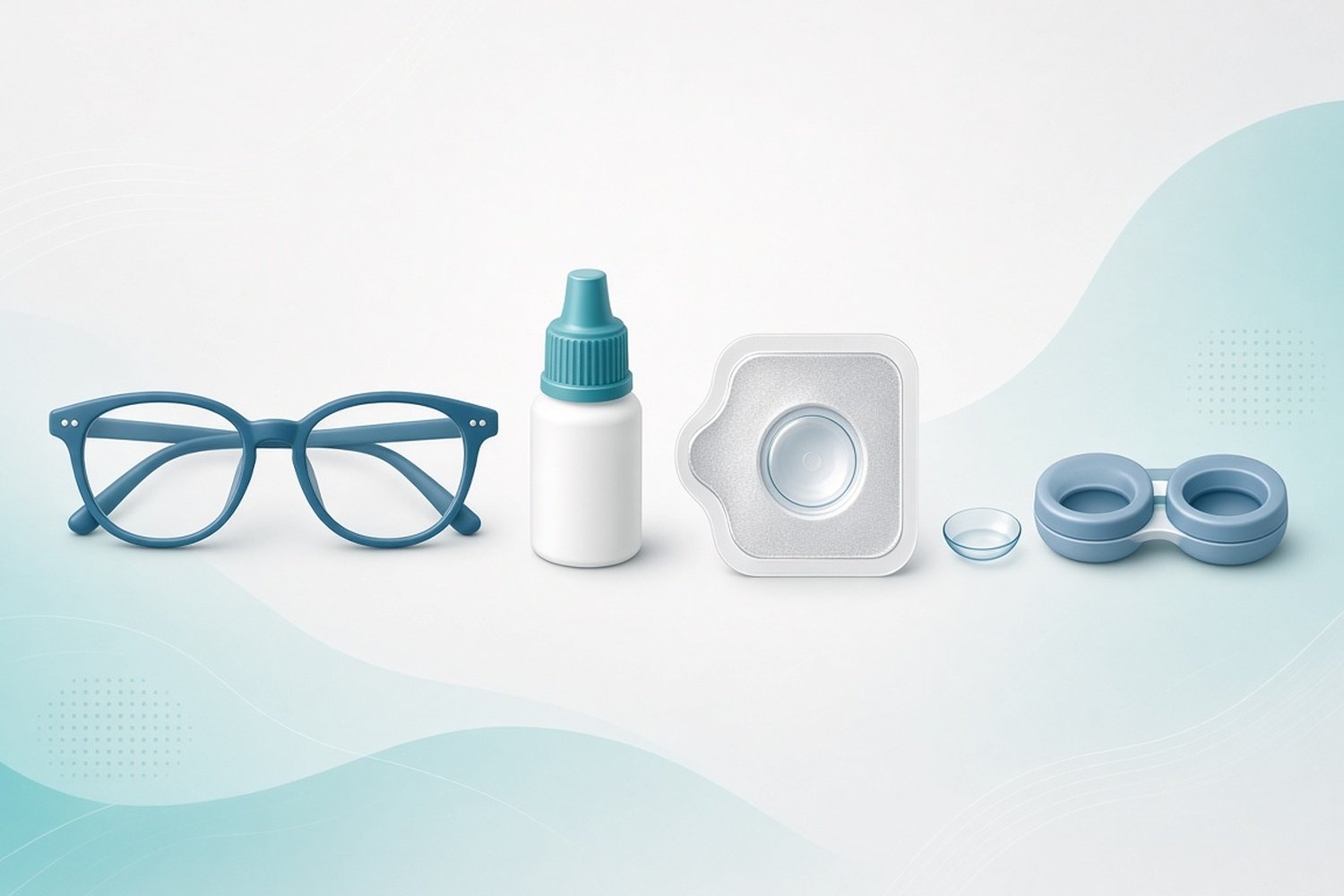
Imagine a parent asking: “My child’s eye grade went up again. Is there anything we can do besides buying new glasses?” It’s a fair question, and the honest answer is that today there are several approaches that eye care professionals use to try to slow myopia in children. None suits every child. But understanding how they differ can help you have a better conversation with your child’s eye care professional.
First, what is myopia control?
Myopia (nearsightedness) makes faraway things look blurry. In many children, it happens because the eyeball grows a little too long from front to back. Myopia tends to increase while a child is still growing, and higher myopia is linked with a greater chance of some eye problems later in life, such as retinal detachment, glaucoma and cataract.
Here’s the key point: myopia cannot be reversed or cured. The goal of myopia control is to slow down how fast it progresses. How much it slows varies from child to child, and some children still progress during treatment. That’s why regular follow-ups matter.
Ordinary glasses vs. myopia control
Regular single-vision glasses or contact lenses do an important job. They make the world clear so your child can see the board, play safely and enjoy reading. But they are designed to correct blur, not to slow eye growth.
Myopia control adds a second goal: clear vision plus an attempt to slow progression. Some options do both at once (special lenses), while others, like eye drops, don’t correct blur at all and are used together with glasses or contacts.
The four main options at a glance
| Myopia-control glasses | Low-dose atropine drops | Myopia-control soft contacts | Ortho-k | |
|---|---|---|---|---|
| How it's used | Special spectacle lenses worn during waking hours | Eye drops, usually at bedtime | Daytime soft contact lenses | Rigid lenses worn overnight, removed in the morning |
| Corrects blurry vision? | Yes | No, glasses or contacts still needed | Yes | Yes, during the day after overnight wear |
| How it may work | Special optical designs intended to slow eye growth (designs vary) | Thought to help limit eye lengthening; exact mechanism not fully known | Special optical designs intended to slow eye growth (designs vary) | Temporarily reshapes the front of the eye overnight; also aims to slow eye elongation |
| Main things to consider | Full-time wear for best result; some children notice blur or halos at first | Possible side effects such as light sensitivity, near blur or irritation; prescribed and monitored by an appropriately licensed clinician | Infection risk with any contact lens; child must handle lenses well | Higher infection risk with overnight wear; more fitting and follow-up visits; effect wears off if stopped |
Myopia-control glasses
These look like ordinary glasses, but they use special optical designs intended to slow eye growth while still correcting your child’s distance vision. Designs differ between products, so how each one works isn’t identical. For the best result, they are generally worn full-time while awake. They are often a comfortable starting point for children who are too young or not ready for contact lenses.
Low-dose atropine eye drops
Atropine drops in low doses have been studied as a way to slow myopia progression. Doctors don’t fully know how they work, but they are thought to help keep the eye from lengthening too quickly. Two important things for parents to know: atropine does not correct blurry vision, so your child will still need glasses or contacts, and it is a medicine that must be prescribed and monitored by an appropriately licensed clinician. Possible side effects include light sensitivity, blurry near vision, irritation or redness, so report anything you notice.
Myopia-control soft contact lenses
These daytime soft lenses correct vision and, like the special glasses, use optical designs intended to slow eye growth. Designs vary by product. Many active kids like not having glasses during sports or play. The trade-off is responsibility. Like any contact lens, there is a risk of eye infection. Your child must wash hands before handling lenses, follow the cleaning and replacement schedule, and keep lenses away from water: remove them before swimming or showering, and never rinse or store them in tap water. Daytime soft lenses should not be slept in. If your child has eye pain, marked redness, light sensitivity or sudden blurry vision while using contact lenses, remove the lens and seek urgent eye care.
Orthokeratology (ortho-k)
Ortho-k uses specially designed rigid lenses worn while sleeping. They temporarily reshape the front of the eye (cornea) overnight to reduce daytime blur, while the treatment also aims to slow eye elongation. Many children see well during the day, but not every child will be fully free of glasses. This is a special case: overnight lens wear is normally discouraged, and ortho-k should only be done with a proper fitting and prescription from a qualified eye care professional. Overnight wear carries a risk of serious eye infection, so strict hygiene and regular check-ups are essential. If ortho-k is stopped, the cornea gradually returns to its original shape and the blur returns. Ortho-k does not shrink the eye back to its pre-myopia length.
Everyday habits still matter
Whatever the option, daily habits are part of the plan. Studies suggest that more time outdoors helps lower a child’s risk of developing myopia, and may delay when it starts. For a child who is already myopic, though, outdoor time and good habits are not a substitute for treatment. Encourage outdoor play and regular breaks from screens and reading.
How do we choose?
There’s no single “best” option for every child. The right choice depends on your child’s age, eye measurements, how quickly the myopia is changing, lifestyle, comfort and your family’s preferences. It also depends on what is appropriate and available locally, which your eye care professional can discuss with you. This article is for education. It is not a prescription, and only a proper eye assessment can tell whether a treatment is suitable for your child.
Frequently asked questions
Can myopia control cure my child’s myopia?
No. Myopia can’t be reversed. The goal is to slow how quickly it increases, and results vary.
Will my child still need glasses?
Most likely, yes. Children still need appropriate optical correction for their existing myopia, whichever control option is used.
Are contact lenses safe for children?
Many children can wear them well with good supervision and hygiene, but every contact lens carries some infection risk. Eye pain, marked redness, light sensitivity or sudden blur means: remove the lens and seek urgent eye care.
How often are check-ups needed?
Regular follow-ups are part of every myopia control plan. Your eye care professional will set a schedule based on your child’s treatment.
Let’s talk about your child’s eyes
If your child’s grade keeps changing, or you’re simply curious about these options, I’d be happy to help. Book an eye assessment with me, and we’ll look at your child’s eyes and talk through what might fit your family. You can also follow Healthy Eyes PH for more parent-friendly eye care tips.
— Dr Mark Paroli, Optometrist
Sources
American Academy of Ophthalmology: Myopia control in children